Why the Best Communities Are Always Looking Ahead
When people think about community association management, they often picture the day-to-day responsibilities—answering homeowner questions, coordinating vendors, responding to maintenance requests, or preparing for board meetings. While those tasks are certainly an important part of professional management, some of the most valuable work happens long before residents ever notice it.
Successful communities aren’t built by reacting to problems as they arise. They’re built through thoughtful planning, responsible financial management, proactive maintenance, and strong partnerships. The decisions made today help shape the community’s success months and even years into the future.
As summer begins to wind down, August becomes one of the most important planning months for many community associations. Boards and management teams begin looking ahead to the next budget year, evaluating long-term projects, reviewing vendor relationships, and preparing for seasonal transitions. While residents are still enjoying pools, walking trails, and neighborhood events, community leaders are already thinking about what comes next.
Budget Season Starts Earlier Than Many People Realize
One of the biggest misconceptions about association budgets is that they’re created just before the new year begins. In reality, the budgeting process often starts months in advance.
Developing a responsible budget requires much more than estimating expenses. It involves reviewing current financial performance, identifying trends, evaluating upcoming maintenance needs, considering inflation and vendor costs, and ensuring reserve contributions continue to support the community’s long-term goals.
A well-prepared budget helps boards make informed decisions while providing homeowners with confidence that association funds are being managed responsibly.
Planning ahead also helps minimize unexpected financial surprises and allows communities to prioritize projects based on need rather than urgency.
Looking Beyond Today’s Repairs
It’s easy to focus on what’s directly in front of us—a cracked sidewalk, a landscaping issue, or a maintenance request. While those items certainly deserve attention, successful communities also invest time planning for tomorrow.
Preventative maintenance is one of the most effective ways to protect community assets while controlling long-term costs.
Scheduling routine inspections, reviewing reserve study recommendations, and addressing smaller issues before they become larger repairs can significantly extend the life of community infrastructure.
Instead of asking, “What needs to be fixed today?” boards should also be asking, “What should we be preparing for next year?”
That shift in thinking often makes the difference between reactive management and proactive community leadership.
Building Strong Vendor Partnerships
Communities rely on trusted vendors every day—from landscapers and maintenance contractors to snow removal companies, engineers, accountants, and legal professionals.
August is an ideal time to evaluate these partnerships.
Are vendors meeting expectations?
Are contracts still providing the best value?
Are seasonal services already scheduled before demand increases?
Planning ahead allows associations to secure qualified vendors before busy seasons begin, reducing delays and helping ensure consistent service throughout the year.
Strong vendor relationships don’t just improve operations—they help communities respond more efficiently when unexpected situations arise.
Planning for Seasonal Transitions
As one season comes to an end, another is just around the corner.
Fall landscaping, tree maintenance, irrigation shutdowns, annual inspections, winterization, snow removal planning, and year-end projects all require coordination well before the first leaves begin to fall.
Communities that plan ahead are able to schedule work strategically, minimize disruptions for residents, and avoid the last-minute rush that often accompanies seasonal changes.
Preparation also gives boards more flexibility when making financial decisions, allowing projects to be prioritized based on available funding and community needs.
The Value of Long-Term Thinking
One of the greatest benefits professional community management brings to an association is perspective.
While individual maintenance requests are important, experienced managers are also looking months—and often years—ahead.
Long-term planning includes:
• Maintaining healthy reserve funds.
• Developing realistic annual budgets.
• Scheduling preventative maintenance.
• Reviewing capital improvement timelines.
• Evaluating vendor performance.
• Preparing boards for future decisions.
This forward-thinking approach creates stability, supports property values, and helps boards make confident, informed decisions on behalf of their communities.
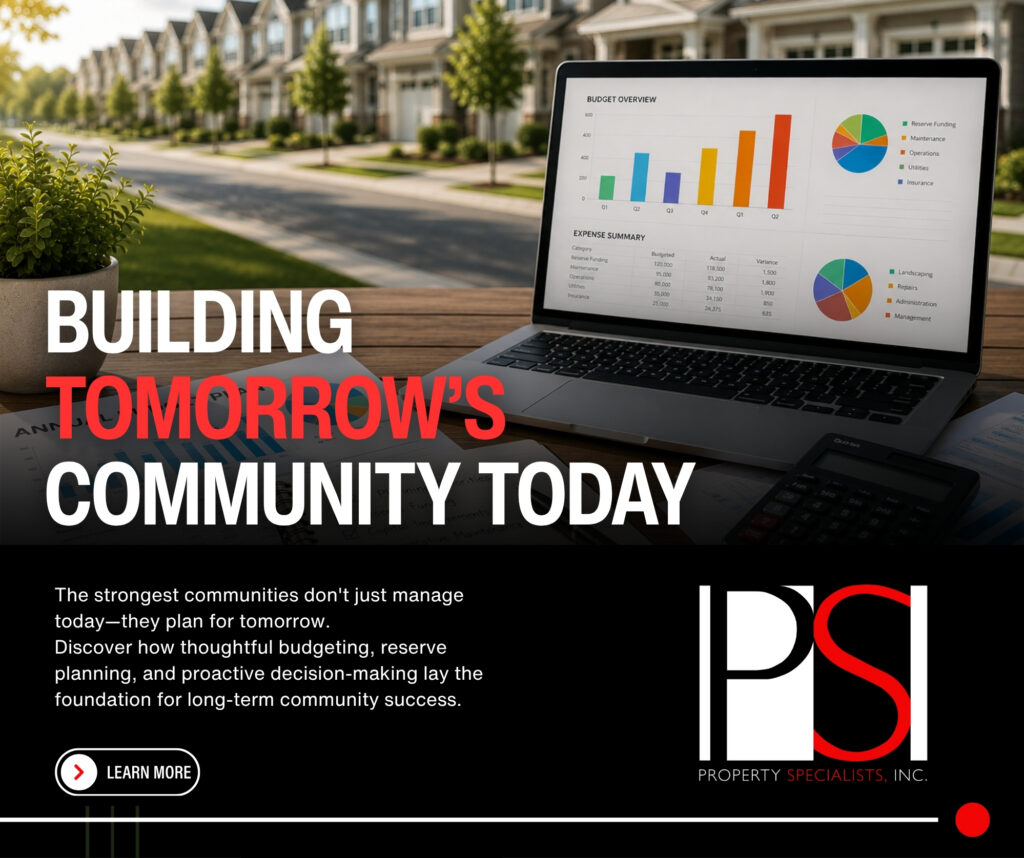
Building Tomorrow’s Community Today
Great communities don’t happen by chance.
They are built through careful planning, responsible financial stewardship, proactive maintenance, and strong partnerships between boards, homeowners, vendors, and professional management.
Every budget reviewed, every reserve project planned, every vendor evaluated, and every preventative maintenance decision contributes to the long-term health of the community.
At Property Specialists, Inc., we believe successful community management isn’t just about solving today’s challenges—it’s about preparing for tomorrow’s opportunities.
Because the strongest communities are the ones that never stop planning for what’s next.